
Quick Answer
Built for ecommerce sellers, brands, and marketing teams, Hilight Smart Video organizes product information, marketing requirements, and available assets into complete marketing videos, with two product video marketing directions for different tasks: Awareness and Conversion.
Why Does Smart Video Ask for the Goal First?
Product information answers what belongs in the video. The marketing goal answers how the video should tell the story. By asking users to choose a goal before generation, Smart Video turns marketing intent into clear content priorities: Awareness leads with understanding and recall, while Conversion leads with buying reasons and action.
This makes it easier to begin. Users do not need to arrive with a finished script and storyboard. They can identify the main marketing task, then add product information, assets, and specific requirements. Smart Video can use that direction to organize the hook, selling points, use cases, pacing, and CTA around the intended outcome.
It also helps the same product assets support different tasks. Product launches, brand content, and use-case education can begin with Awareness. Promotions, product-page videos, and performance ads can begin with Conversion, giving the available materials a clearer role in the finished video.
Awareness: Make the Product Easy to Understand
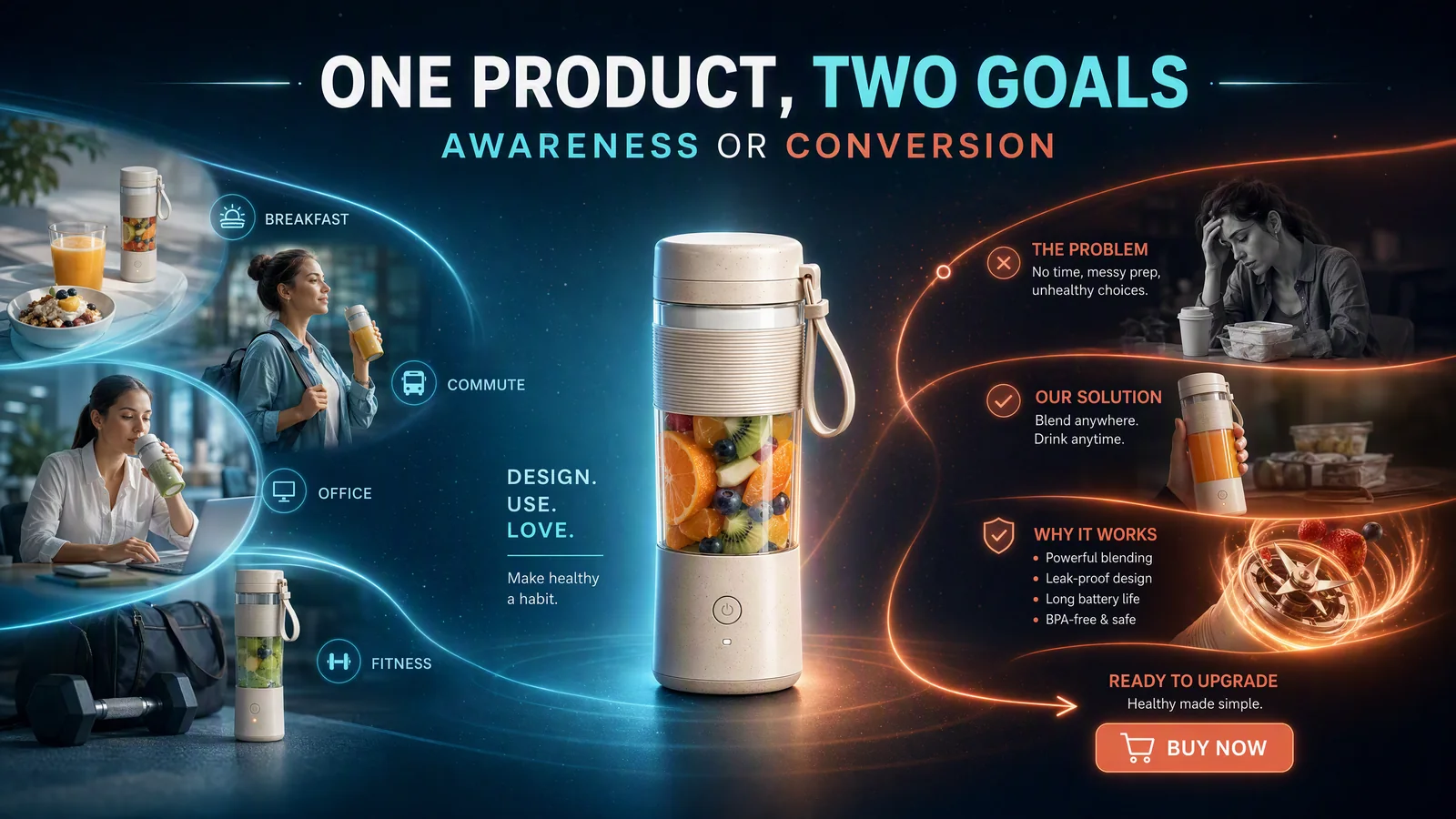
Awareness works well for product launches, brand content, feature demonstrations, and social media discovery. Its main job is to answer: What is the product, what makes it useful, and where does it fit into everyday life?
When Awareness is selected, Smart Video gives more priority to product features, use cases, visual highlights, and memorable details. The video may still include a call to action, but direct selling is not the main storyline.
Conversion: Make the Buying Reasons Clear
Conversion works well for promotions, product pages, and performance ads. Its main job is to answer: What problem does the product solve, why is it worth choosing, and what should the viewer do next?
When Conversion is selected, Smart Video gives more priority to pain points, key selling points, supporting proof, buying reasons, and a clear CTA. This direction is designed to support clicks, inquiries, add-to-cart actions, or purchases.
How Can the Same Product Support Both Goals?
Take a portable blender as an example. With Awareness selected, the video can focus on the portable design, everyday use cases, and simple operation so users can quickly understand the product. With Conversion selected, it can begin with the hassle of preparing breakfast or carrying a regular blender, then explain how the product solves those problems and why it is worth buying.
This short example illustrates the difference between the two goals. After a goal is selected, Smart Video combines the product information, available assets, and prompt to organize the hook, selling-point message, script, scenes, pacing, and CTA automatically.
Which Goal Should You Choose?
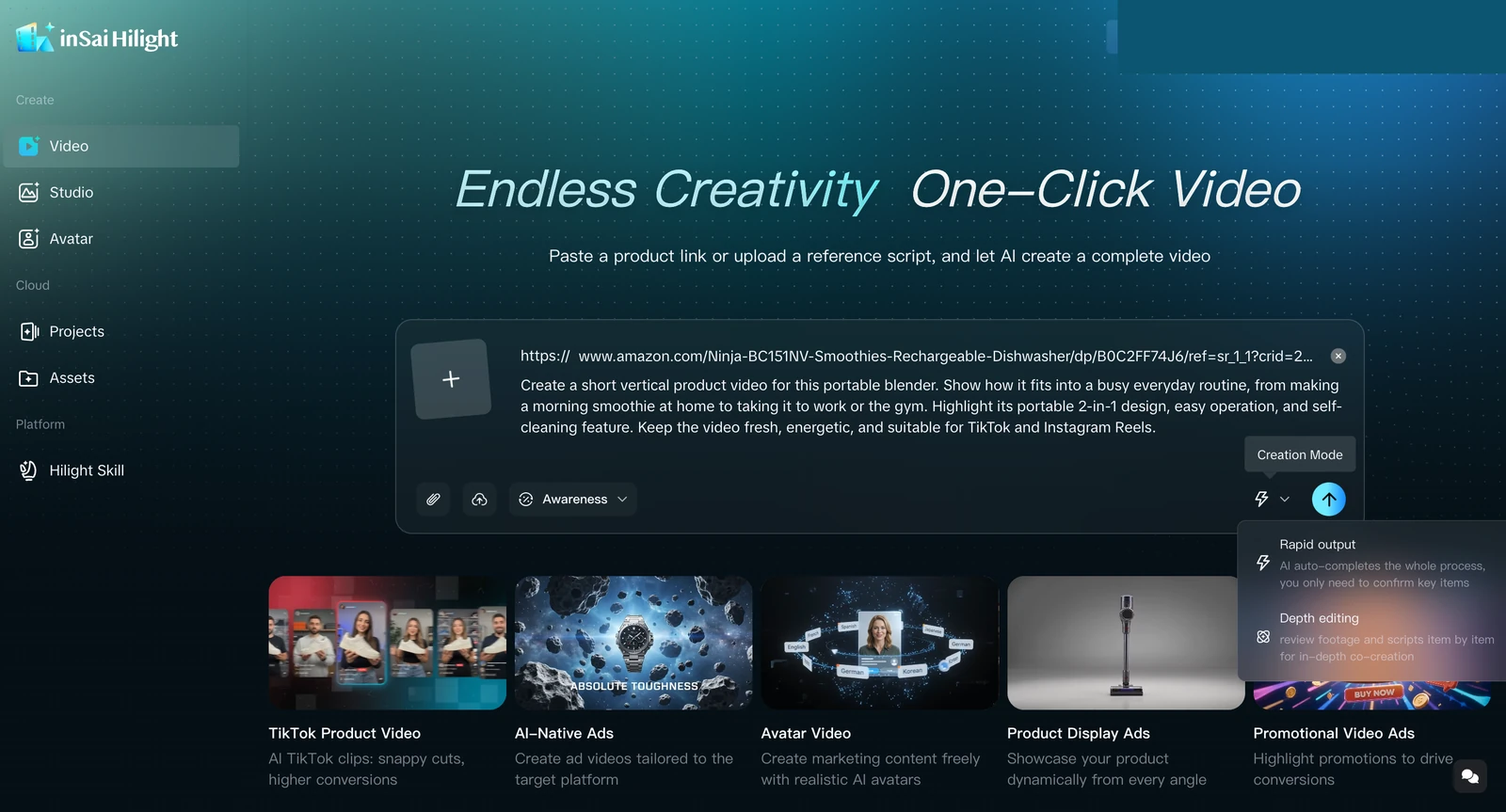
If both outcomes matter, choose the goal that best matches the primary task and add the secondary requirement to the prompt. The user does not need to design two separate creative plans. Smart Video uses the product information, prompt, available assets, and selected goal to determine the video direction.
If you are starting from a product detail page, continue with the Product Link to Video guide to see how product-page information and a creative brief enter Smart Video.
Frequently Asked Questions
Does Smart Video adjust the creative after a goal is selected?
Yes. Smart Video uses the product information, available assets, prompt, and selected goal to adjust the hook, message priorities, script, scenes, pacing, and CTA before generating the complete product video.
Can an Awareness video include a CTA?
Yes. An Awareness video can invite people to learn more or follow the brand, while keeping product understanding, use cases, and recall as the main focus.
Does a Conversion video always need a price or promotion?
No. Conversion is about making the buying reasons and next action clear. Prices, discounts, or policies should only appear when that information has been confirmed.

