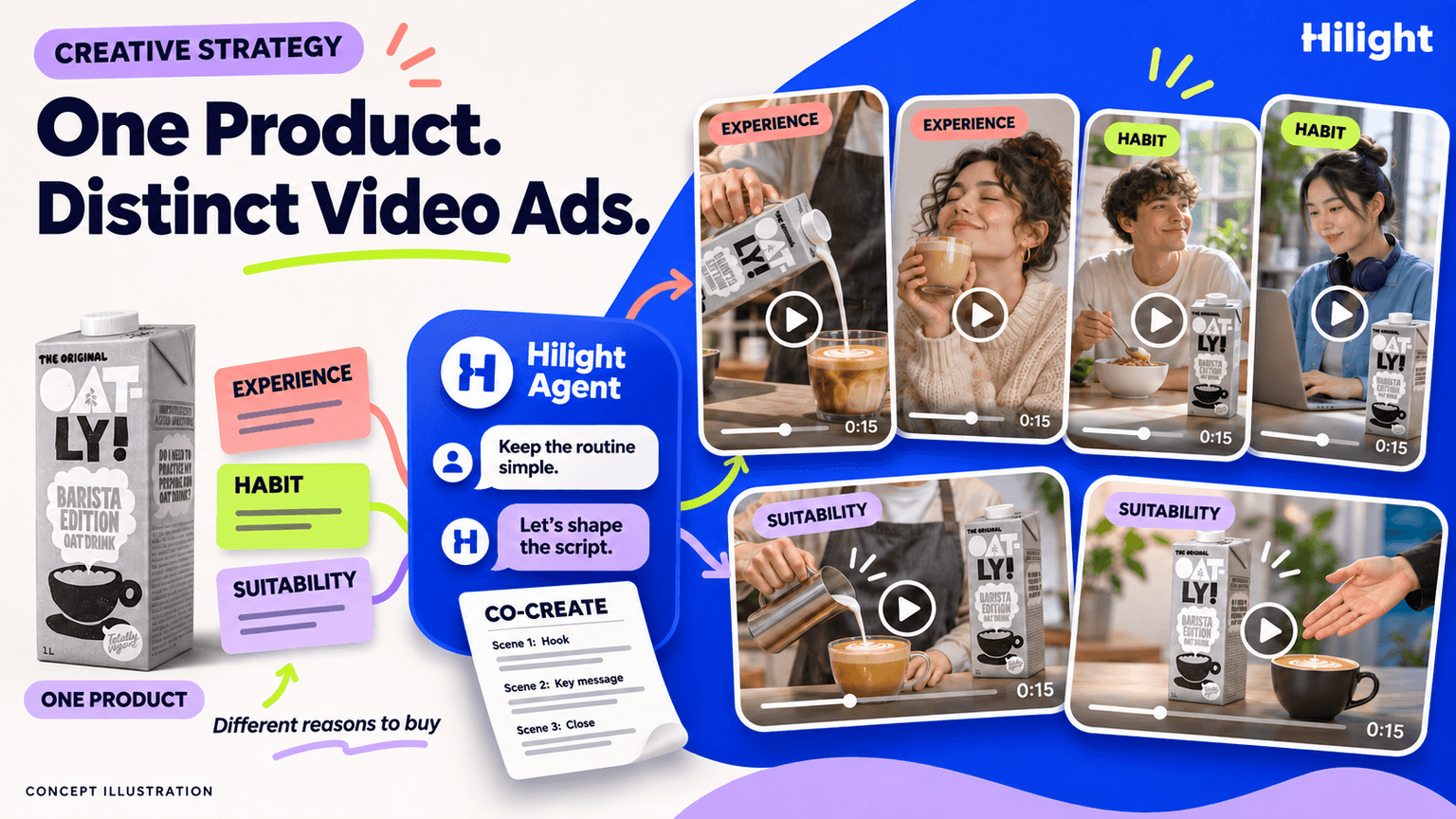
Ten ads for one product can still offer only one reason to buy. The opening, music, and captions may change while the audience hears the same message. Before making another asset, decide which new purchase question it should answer.
Creative strategy connects a marketing goal, a reason to buy, and the content that communicates it. It helps you choose what an ad should emphasize and judge whether a new concept adds something different. A strategy table can carry those decisions into video co-creation with Hilight, giving concept selection and revisions a clear basis.
Three decisions at the heart of creative strategy
A useful creative strategy explains the action you want, the reason someone should care, and the evidence that makes the message credible. Asana's strategy guide also identifies objectives, audience, and the main message as important decisions.
Marketing angles express specific reasons to buy. Ad creative is the image, video, and copy the audience encounters. Connecting these decisions explains why particular content belongs in an ad, beyond whether it looks attractive.
Consider a message about ease of use. Someone unfamiliar with a product may first need to understand its purpose. Someone already interested may need to see how it fits an existing habit. Similar benefits can still lead to ads that answer different questions.
Find advertising angles in customer questions
Reviews, presale questions, and return reasons offer more specific starting points than a broad description of what a demographic likes. Recurring questions can reveal missing information: what a product does, whether using it is inconvenient, or whether it suits a particular situation.
Match the customer question to a product benefit. An angle becomes worth developing when product facts support the answer. Without that connection, an appealing promise can reach production with little substance beyond the headline.
Summarize each candidate in one sentence: “Address [customer question] by emphasizing [reason to buy], supported by [product fact or material].” Write several answers for the same product, then compare whether each resolves a different question.
If customer evidence is limited, ask Hilight to suggest directions from the product information and marketing goal. Treat them as hypotheses, then use questions and real feedback to decide which deserve further development. You supply the business facts; the agent can help make creative decisions and develop the expression.
Develop distinct concepts for the same product
For a brief example, consider Oatly Barista Edition. Its official product information describes a plant-based drink for use in coffee. One product can support concepts based on an appealing experience, a change in habit, or a practical concern. These creative strategy examples are illustrative, not official Oatly advertisements.

The difference lies in what the viewer gains. A builds interest, B addresses hesitation about trying something, and C supports a suitability decision. Apply the same comparison to another product: does each ad offer a different reason to pay attention or consider buying?
Organize creative decisions in a strategy table
Once you have candidate directions, use a table to turn them into production guidance. The purpose is to connect the buying motive to content choices. It does not require a detailed shooting script.
For Concept B, the main reason is that a familiar routine can stay. That entry gives priority to everyday integration rather than another concept about an exciting new experience. A decision in the table becomes a practical selection criterion.
Fill in this creative strategy template yourself or develop it through co-creation with Hilight. The agent can propose concepts first; you can then organize their customer questions, messages, and evidence in the table for comparison.
Check creative differences against the strategy
Use the completed table to review the proposals. Set music, colors, and text placement aside briefly and ask what different information the viewer receives. If the concepts all repeat the same benefit, their main expression needs more work.
Meta Blueprint's creative diversification course distinguishes concept and motivator diversification from format diversification. Keep that distinction in mind when reviewing changes.
This review also produces useful feedback. “Make B more creative” leaves the change undefined. “Keep B focused on fitting the existing routine and remove content about a novel experience” identifies what to retain and what to adjust.
After launch, record observations against the relevant direction, alongside the audience, offer, and delivery period. Clicks, visits, and purchases can inform the next round. When several conditions change together, retain those differences in the record rather than attributing the entire result to creative.
Develop video ideas and production with Hilight
Hilight is an AI marketing agent that can develop creative directions from product information and a marketing goal, then continue into product-video production. The strategy table serves two purposes: organizing what each concept communicates and providing a basis for revisions.
Turn buying motives into video content
In the same-product co-creation exercise above, we gave Hilight the three buying motives and explored Concept B. The agent organized “keep the familiar routine” into a sequence that establishes a familiar situation, introduces the product, and returns to everyday use. The main message gained a specific video expression.
The example shows how the table guides content: the customer concern shapes the opening situation, the main reason to buy shapes the body of the video, and the product evidence helps identify what existing material supports and what still needs to be added.
Refine video expression against the strategy
In the editor, we made the existing usage method more explicit and specified that demonstrations pointing to a different motive should be left out. This kept B focused on the effort of trying the product, distinct from A's experience appeal.
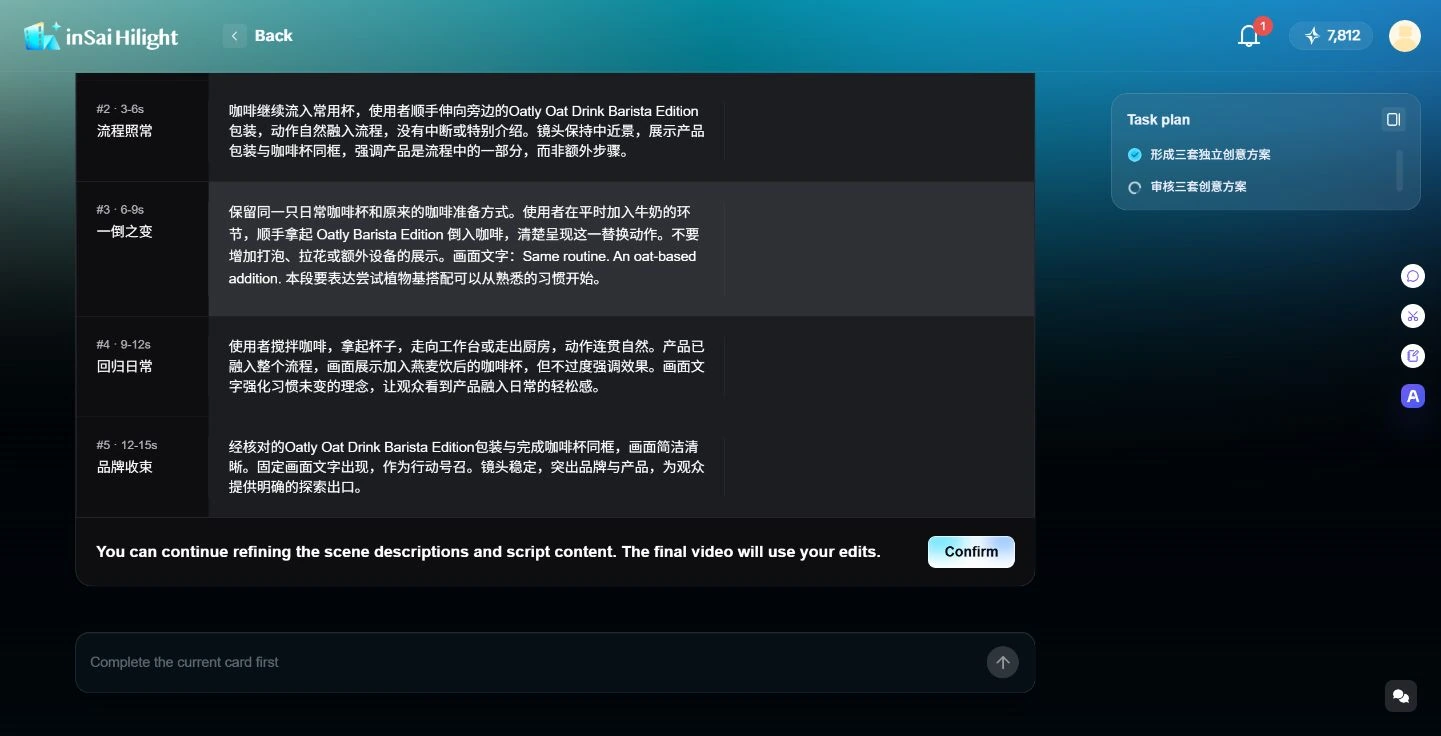
Apply the same judgment as other directions move into production. A should build interest in the experience, while C needs usage material that answers the concern. Use corresponding real footage for actual usage results; AI-generated scenes can provide context. Keep product and brand requirements consistent while developing the main content around each reason to buy.
If the direction is still open, bring product information, a marketing goal, and existing customer questions to Hilight and ask the agent to propose concepts. If you have a strategy table, include it with the creative requirements and refine the ideas through co-creation. For the next format choice, see product-ad formats and creation options.
Creative strategy and co-creation with Hilight work together to develop different reasons to buy the same product, then give those reasons distinct video expressions.
Questions about Hilight
Yes. Provide product information and a marketing goal, and ask Hilight to suggest creative directions. Include existing questions, reviews, or usage concerns to connect the proposals to real needs. Treat directions without customer evidence as hypotheses to investigate.

