Quick Answer
TikTok product video ads are valuable because they turn a product into a short, watchable buying reason: what it is, why it matters, who it is for, and why someone should keep watching. Hilight's TikTok Product Video Generator is built for this product-first short-video use case.
For many ecommerce teams, the hard part is not deciding whether TikTok matters. It is knowing how to start when they only have a product link, a few images, and scattered selling points.
Hilight helps sellers start from that product context. In the TikTok product video scene, teams can either enter product information themselves or use a product link to identify product information and images, then review recommended selling points and target audience notes before generating a first TikTok-style video direction.
TikTok commerce has moved from experiment to operating channel for many sellers. eMarketer expects TikTok Shop US sales to reach $15.82 billion in 2025, up 108%, while Momentum Works reported TikTok Shop reached $26.2 billion in global GMV in H1 2025, doubling year over year, with the US at $5.8 billion.
Those numbers do not automatically tell a seller what to make first. You may have the product, images, features, and a rough audience, but still wonder: what should the first TikTok product video actually say?
This article stays at that starting point. It explains why TikTok product video ads are different from generic product introductions, what a first batch should clarify, and how Hilight helps turn manual product input or product-link parsing into a structured video starting point.
Why TikTok Product Video Ads Are Becoming a Serious Ecommerce Opportunity
TikTok product video ads sit at the overlap of entertainment, search, social proof, and shopping intent. A viewer may discover a product through a creator-style video, watch a short demonstration, compare it with comments or similar content, and move closer to purchase without leaving the short-video habit.
That matters for sellers because the format rewards product understanding, not only production scale. A strong product video can make one small buying reason easy to feel: the problem it solves, the moment it fits into, or the reason this version is worth noticing.
The opportunity is especially clear for teams that sell visual, explainable, or impulse-friendly products:
Beauty, personal care, fashion, accessories, and gadgets where the first few seconds decide whether people keep watching.
Home, kitchen, wellness, and lifestyle products that benefit from problem-solution demonstrations or routine context.
Seasonal offers, bundles, and launches that need multiple short-video angles before the team knows which one is strongest.
But a growing opportunity also creates a practical content problem. Sellers cannot rely on one polished brand video and expect it to answer every audience, hook, and buying objection. TikTok product video ads usually need iteration.
The Real Blocker: Sellers Have Products, but Not a Clear First Video Direction
Most sellers do not start with a blank business. They already have a product page, a few product images, maybe customer reviews, a list of features, and a rough idea of who might buy. The blank part is the video idea.
Common starting problems include:
- The seller knows the product, but not which hook should open the video.
- The team has images, but not enough footage for several TikTok-style variations.
- Product features are clear internally, but the viewer-facing buying reason is still vague.
- The team wants to start with TikTok Shop or TikTok ads, but does not know how many video directions to prepare.
- Existing brand videos look too polished, too slow, or too much like a catalog.
This is why the starting point matters. A seller who wants to do TikTok product marketing does not only need a script. They need a way to translate product context into a short video concept: product information, usable images, selling points, audience angle, hook, visual order, and call to action.
What Makes a TikTok Product Video Different from a Normal Product Introduction
A normal product introduction often explains the product in the order the brand thinks about it: name, features, benefits, use cases, and purchase information. A TikTok product video usually needs a sharper entry point.
Instead of asking, "How do we describe the product completely?", the better first question is, "Why would someone stop scrolling for this product right now?"
That changes the structure:
This does not mean the video should feel messy. It means the first version should be built around one audience and one reason to keep watching.
What Your First TikTok Product Videos Should Clarify
The first batch of TikTok product video ads should not try to answer every possible strategy question. It should help you find a clear angle for the product.
Useful first decisions include:
Open with a problem, result, surprising visual, question, or direct product claim.
Frame the product for a specific buyer, use case, or moment instead of everyone at once.
Choose whether the video relies on demonstration, comparison, testimonial-style language, or product detail shots.
Decide whether the main reason to act is a discount, bundle, seasonal moment, or everyday benefit.
This is where AI can be helpful. Not because it replaces judgment, but because it gives teams a faster way to produce first drafts and compare directions before spending more time on production.
How Hilight Helps Sellers Start from Product Links and Existing Assets
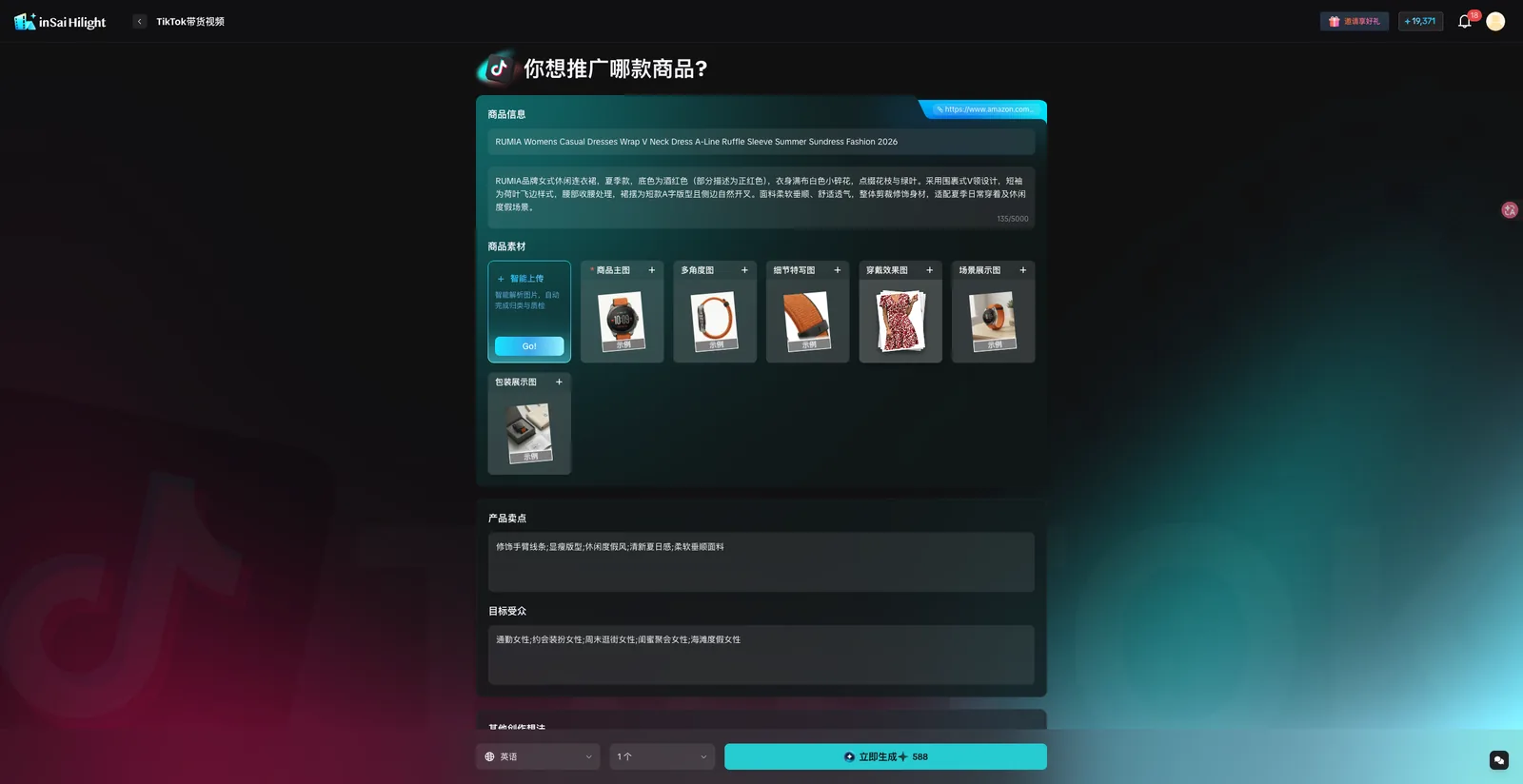
Hilight's TikTok product video scene is designed for the seller who wants to begin, but does not yet have a complete video plan. Instead of starting from a blank editing timeline, the team can start by entering product information directly or by parsing a product link.
Inside the current Smart Video workflow, sellers can begin from a product link, a reference idea, or existing product materials. In the TikTok product video scene, manual input gives the seller full control over the brief, while product-link parsing can automatically bring in product information and product images, then help recommend product selling points and target audience notes. If your team is still organizing product-page information before making videos, the Product Link to Video guide is a useful next read. If you already want the operating steps, use the How to Make TikTok Product Videos tutorial as the follow-up. The seller can still edit the brief, add creative requirements, choose language and quantity, and decide which direction is worth generating.
That makes the workflow useful as a practical bridge from product context to video direction:
Start from product context
Use a product link, product images, or a manual brief so the video starts from what is actually being sold.
Clarify the selling angle
Review the product information, selling points, and target audience before treating any video direction as ready.
Generate a first direction
Move from "we should do TikTok" to a draft that the team can review, compare, and revise.
The result still needs human review. A seller should check whether the generated video direction matches the product, the audience, the brand tone, and any platform or ad-policy requirements before using it in a campaign.
How to Review AI-Generated TikTok Product Videos Before Using Them
Before a generated TikTok product video becomes part of a campaign, review it like a marketer rather than only like an editor.
Check five things first:
A broad opening like "This product is amazing" is weaker than a clear problem, result, or use moment.
TikTok viewers should understand what is being sold without waiting too long.
One video should usually carry one main reason to care, not every product feature.
Claims, demonstrations, and visuals should stay aligned with what the product can actually do.
The viewer should know whether to visit a product page, explore an offer, or learn more.
If the first result feels generic, do not treat it as failure. Rewrite the product selling point, narrow the audience, change the opening idea, or generate another direction. TikTok product video marketing is often an iteration loop.
Related Hilight Reads
- Image to Video AI: useful when product images need motion or additional visual demonstration clips.
- AI Product Presenter Video: useful when a presenter should appear with the product and explain the selling point.
FAQ
Can AI create TikTok product video ads from product materials?
Yes. AI can help turn product links, product images, selling points, and audience notes into TikTok-style product video drafts. The seller should still review the message, claims, visuals, and campaign fit before use.
Is a TikTok product video the same as a normal product demo?
No. A product demo explains how something works. A TikTok product video may include a demo, but it usually starts with a stronger hook, a clearer audience angle, and a short buying reason designed for social discovery.
Do I need new footage before I start?
Not always. If you already have a product link, clear product images, and a few selling points, you can start testing video directions. New footage may help later when you know which angle deserves more production effort.
What should my first TikTok product videos clarify?
Start with hook, audience, proof, offer, and pacing. These choices help you decide whether the product should be introduced through a problem-solution angle, a visual demonstration, a testimonial-style message, or a more direct offer.
Should I edit the result after product-link parsing?
Yes. Product-link parsing is a starting point, not the final creative decision. Review the recognized product information, selling points, audience notes, and claims, then adjust the brief so the video matches the product and the people you want to reach.

